You Can See Everything
15When is a documentary not a documentary? When it’s directed by Nathan Fielder.
Anyone who is aware of Fielder, known for his unique TV shows Nathan for You and The Rehearsal, will appreciate he does things in his very distinctive style, and his directorial feature debut is no different.
On the surface its focus is Elizabeth Holmes - founder of the health tech company Theranos who was convicted of fraud and sentenced to just over 11 years in prison, and yet there’s nothing straightforward about Fielder’s approach.
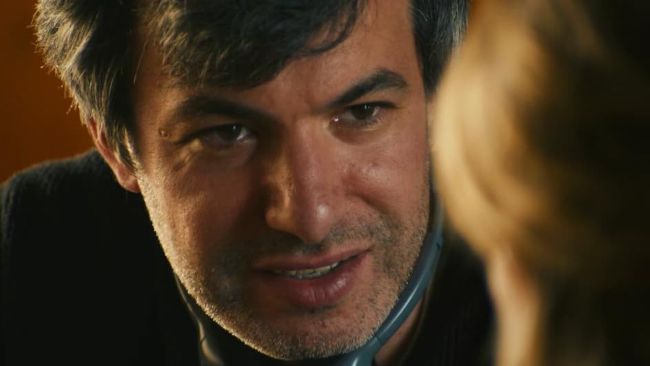
Like I said, I want you to be more like Amanda's version of you.
With just 34 days before Elizabeth begins her time in prison, she and her partner Billy Evans invite Nathan and his film crew to their home so they can start making a documentary about them.
He has open access to their lives, with the couple even inviting Nathan to stay in their guest house, with plenty of time and opportunity to spend time with them and have candid conversations.
But over the coming days, Nathan starts to get the impression that the couple aren’t just being dishonest with him, but also each other.
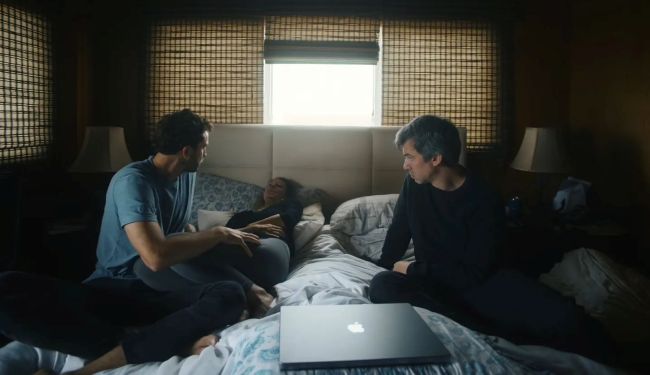
Well Louis said he would agree to a threesome with us...
Documentaries, especially about crime, have taken off big time in recent years, but Fielder’s film has become a cultural phenomenon, despite its hefty three hour duration.
It’s trademark Fielder, but if you’re not used to his style – which is a blurry documentary where fact and fiction seemingly live in the same world – it can be a tad disconcerting, and a little getting used to.
For instance, Fielder appears to almost play the character of a director - which is an interesting concept especially as this film probes the idea of ‘playing a character’ within the confines of its own documentary parameters – often seen with headphones around his neck and pondering over footage appearing on his monitor. It’s almost a parody of a what a doc director is supposed to be like.
And as we’ve seen from bone fide documentarians such as the sublime Louis Theroux, you can often get more out of your subject by building a bond with them. And Fielder does just that, but there occasionally feels to be more going on than is said – which is put to him by a surprise appearance – but more of them later.
In truth, there isn’t much ‘story’ here; she isn’t a mass murderer, she isn’t evil incarnate, she hasn’t catfished anyone – which are the kind of topics that hook audiences into the kind of documentaries you might find doing well on Netflix. She’s been found guilty of fraud, and is about to do time for her crime, which just isn’t as appealing as the others mentioned. But with Fielder’s vision, it is incredibly compelling.
Its key is the fact that with Fielder’s involvement – like so many of his other projects – his reality plays out more like fantasy. Even down to its soundtrack that has the impact of a score for a Hollywood drama.
And in that sense he does become a character, an inquisitive filmmaker who gets a whiff of a lie or two and is keen to uncover the truth.
And then there’s its meta-twist; in 2022 Amanda Seyfried played Elizabeth Holmes in the Hulu mini-series The Dropout, a show that brought Holmes’ story to the masses. Not only does Fielder interview the actress about her role, but also persuades her to reprise it – in a documentary of all things – and her participation just adds to the sheer bonkers nature of it all.
To be honest, Fielder isn’t a great documentarian; there are obvious opportunities that he misses, such as getting Holmes’ father alone – as he clearly has much more to tell than he feel comfortable doing in front of her partner Evans, and digging deeper with Holmes and Evans, which you just know that Theroux would do.
But you can look past his shortcomings due to his talent for putting the theatrical into the documentary; his directing persona does get personal, and his interactions with his subjects certainly brings the drama, albeit one with a ‘heightened’ reality.
It also lacks a finite ending, that most solid documentary films have, lacking a clarity, opting instead for interpretation with its conclusion.
Its title is also misleading, although paraphrasing a text from Holmes, as everything isn’t as it seems; perhaps you get a glimpse of everything, but that’s all you need to see, with Fielder as the curious ringleader with his documentary circus – and boy does he put a show on.